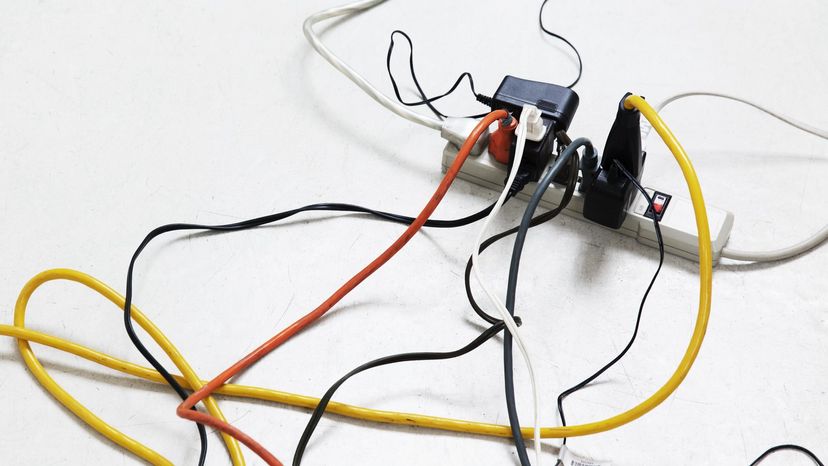
When you put together a computer system, one piece of standard equipment you'll probably buy is a surge protector. They serve one obvious function; they let you plug multiple components into one power outlet. With all the different components that make up a computer system, surge protectors are useful devices.
But the other function of a surge protector power strip — protecting the electronics in your computer from power surges — is far more important. So how do surge protectors work and when you need them? And how do you know if the one you have is good quality?
Advertisement
The main job of a surge protector system is to protect electronic devices from "surges." So if you're wondering what a surge protector does, the first question is, "What are surges?" And then, "Why do electronics need to be protected from them?"
A power surge, or transient voltage, is an increase in voltage significantly above the designated level in a flow of electricity. In normal household and office wiring in the United States, the standard voltage is 120 volts. If the voltage rises above 120 volts, there is a problem, and a surge protector helps prevent surges from damaging your electronics.
To understand the problem, it is helpful to understand something about voltage. Voltage is a measure of a difference in electric potential energy. Electric current travels from point to point because there is a greater electric potential energy on one end of the wire than there is on the other. This is the same sort of principle that makes water under pressure flow out of a hose — higher pressure on one end of the hose pushes water toward an area of lower pressure. You can think of voltage as a measure of electrical pressure.
Various factors can cause a brief increase in voltage:
- When the increase lasts three nanoseconds (billionths of a second) or more, it's called a surge.
- When it only lasts for one or two nanoseconds, it's called a spike.
If the surge or spike is high enough, it can cause major damage on a machine. The effect is very similar to applying too much water pressure to a hose. If there is too much water pressure, a hose will burst. A similar thing happens when too much electrical pressure runs through a wire — the wire "bursts." Actually, the wire heats up like the filament in a light bulb and it burns, but it's the same idea.
Even if increased voltage doesn't immediately break your electronics, it may put extra strain on the components, wearing them down over time. In the next section, we'll look at what surge protectors do to prevent this from happening.