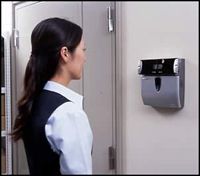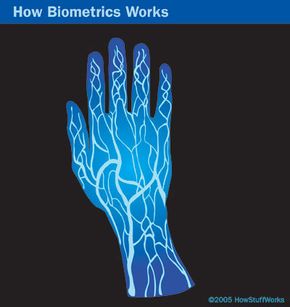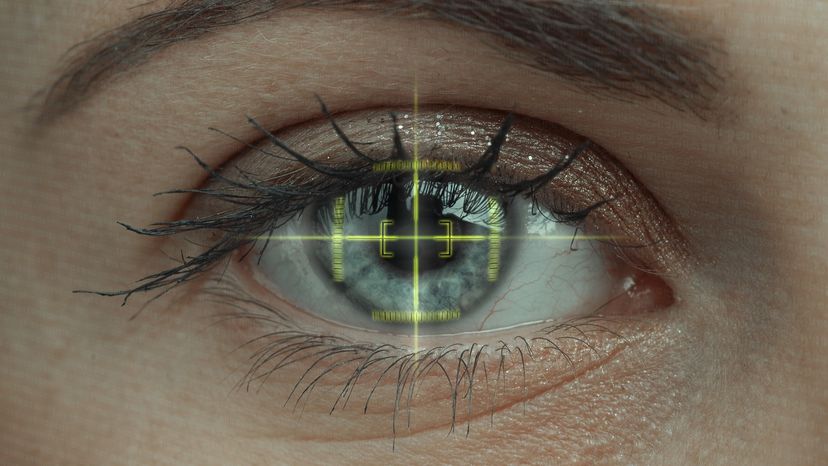
![]() Image courtesy Hitachi Engineering Co. Vein scanning is one form of biometric identification. See more biometric images. |
You might also encounter this scenario, minus the deadly biological weapon, during an average day on the job. Airports, hospitals, hotels, grocery stores and even Disney theme parks increasingly use biometrics -- technology that identifies you based on your physical or behavioral traits -- for added security.
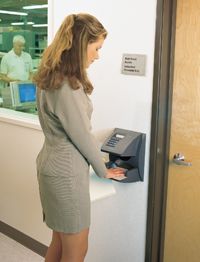
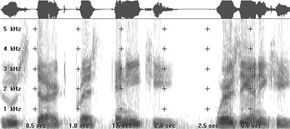
In this article, you'll learn about biometric systems that use handwriting, hand geometry, voiceprints, iris structure and vein structure. You'll also learn why more businesses and governments use the technology and whether Q's fake contact lenses, recorded voice and silicone hand could really get James Bond into the lab (and let him save the world).
|
|
You take basic security precautions every day -- you use a key to get into your house and log on to your computer with a username and password. You've probably also experienced the panic that comes with misplaced keys and forgotten passwords. It isn't just that you can't get what you need -- if you lose your keys or jot your password on a piece of paper, someone else can find them and use them as though they were you.
Instead of using something you have (like a key) or something you know (like a password), biometrics uses who you are to identify you. Biometrics can use physical characteristics, like your face, fingerprints, irises or veins, or behavioral characteristics like your voice, handwriting or typing rhythm. Unlike keys and passwords, your personal traits are extremely difficult to lose or forget. They can also be very difficult to copy. For this reason, many people consider them to be safer and more secure than keys or passwords.
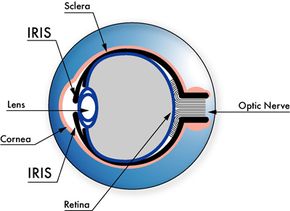
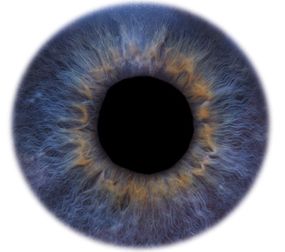
![]() Photo courtesy Iridian Technologies Biometrics uses unique features, like the iris of your eye, to identify you. |
Biometric systems can seem complicated, but they all use the same three steps:
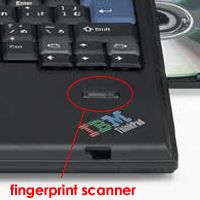
![]() Image courtesy Consumer Guide Products |
Biometric security systems, like the fingerprint scanner available on the IBM ThinkPad T43 (right), is becoming more common for home use. You can read other HowStuffWorks articles to learn about face recognition and fingerprint scanning.
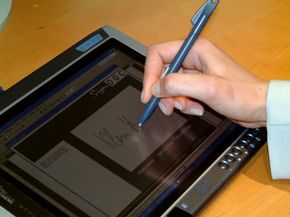
Next, we'll examine how biometrics provides security using other traits, starting with handwriting.
|
|
More Options: