
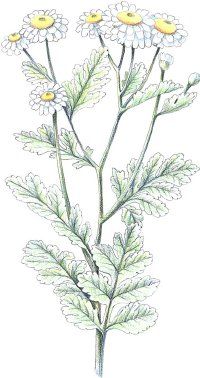
Feverfew is indigenous to Europe and the Balkan peninsula and is said to have grown around the Greek Parthenon, thus the species name parthenium. Its common name comes from the Latin febri fugia, which means "driver out of fevers."
Feverfew has made its way to both North and South America, where it is now naturalized. Its leaves have taken on a life of their own as a popular herbal remedy, used to soothe migraines, joint inflammation and more.
Advertisement
Uses of Feverfew
Feverfew is used to relieve headaches, particularly vascular headaches such as migraines. Doctors aren't sure what causes migraines, but they know these severe headaches involve blood vessel changes.
One theory suggests that migraines occur when the blood vessels in the head expand and press on the nerves, causing pain. Another theory proposes that these headaches occur as the blood vessels react to outside stimuli by affecting blood flow to various parts of the brain. And recent studies suggest that migraines occur when serotonin is released from platelets in blood vessels. Feverfew relaxes tension in the blood vessels in the brain. Studies confirm feverfew's effectiveness as a migraine remedy.
Although some herbalists believe feverfew is most effective when used long term to prevent chronic migraines, some people find it helpful when taken at the onset of a headache. Besides vascular headaches, feverfew may relieve premenstrual headaches, which often are due to fluid retention and hormonal effects. Some physicians recommend feverfew to relieve menstrual cramps and to facilitate delivery of the placenta following childbirth.
Feverfew also is reported to reduce fever and inflammation in joints and tissues. The main constituent of feverfew, parthenolide, has been credited with inhibiting the release of serotonin, histamine, and other inflammatory substances that make blood vessels spasm and become inflamed. Parthenolide, the same substance that helps alleviate migraine headaches, has the overall effect of reducing pain and inflammation throughout the body -- a result similar to taking a daily aspirin but without the side effects associated with daily aspirin use.
Reportedly, the amount of parthenolide varies from plant to plant, so it is wise to know how much of this active ingredient a feverfew product contains before you buy it. One study of commercially available feverfew products found that most of them contained no parthenolide at all: They were dried herbs, and because parthenolide is volatile, it had evaporated. Look for a product that contains 0.2 percent parthenolide.
In the next section, you will learn how to prepare feverfew for herbal remedies and some of the potentially dangerous side effects.
To learn more about treating common medical conditions at home, try the following links:
- For an overview of all of our herbal remedies, go to the main Herbal Remedies page.
- To learn more about treating medical conditions at home, visit our main Home Remedies page.
- One of the best things you can do for your health and well being is to make sure you are getting enough of the vital nutrients your body needs. Visit our Vitamins page to learn more.
This information is solely for informational purposes. IT IS NOT INTENDED TO PROVIDE MEDICAL ADVICE. Neither the Editors of Consumer Guide (R), Publications International, Ltd., the author nor publisher take responsibility for any possible consequences from any treatment, procedure, exercise, dietary modification, action or application of medication which results from reading or following the information contained in this information. The publication of this information does not constitute the practice of medicine, and this information does not replace the advice of your physician or other health care provider. Before undertaking any course of treatment, the reader must seek the advice of their physician or other health care provider.Before engaging in any complementary medical technique, including the use of natural or herbal remedies, you should be aware that many of these techniques have not been evaluated in scientific studies. Use of these remedies in connection with over the counter or prescription medications can cause severe adverse reactions. Often, only limited information is available about their safety and effectiveness. Each state and each discipline has its own rules about whether practitioners are required to be professionally licensed. If you plan to visit a practitioner, it is recommended that you choose one who is licensed by a recognized national organization and who abides by the organization's standards. It is always best to speak with your primary health care provider before starting any new therapeutic technique.
Advertisement