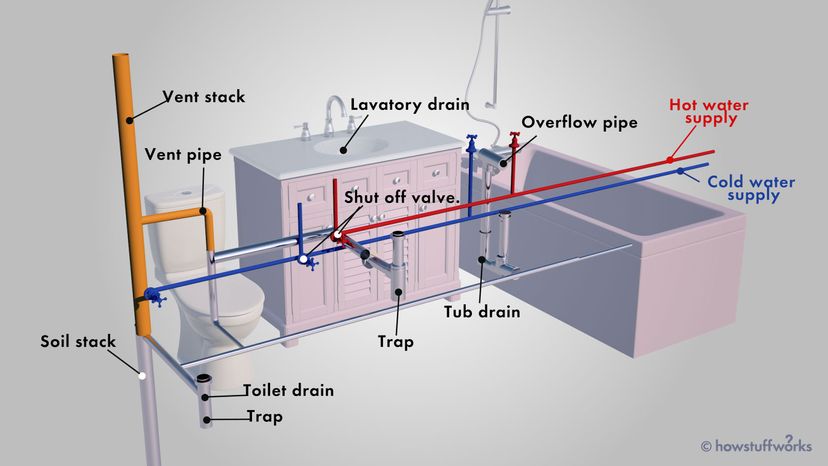
Plumbing follows the basic laws of nature — gravity, pressure and water seeking its own level. Knowing this, you can understand its "mysteries" and make dozens of fixes to your home's plumbing system. You can save yourself time, trouble and money!
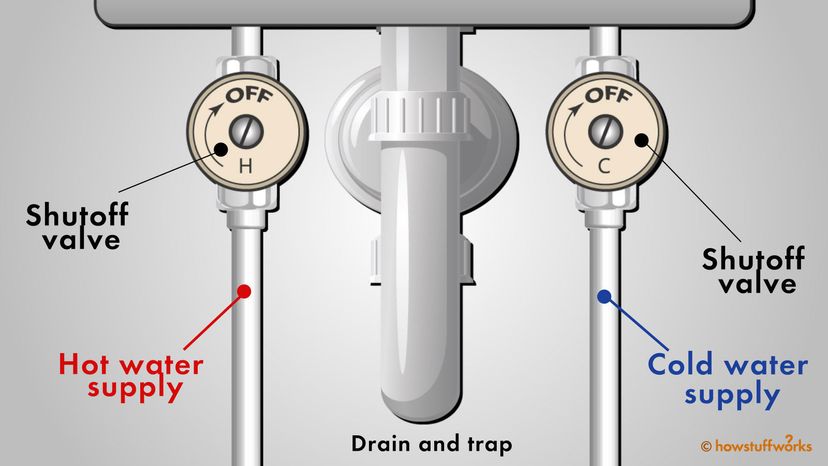
The plumbing system in your home is composed of two separate subsystems. One subsystem brings freshwater in, and the other takes wastewater out. The water that comes into your home is under pressure. It enters your home under enough pressure to allow it to travel upstairs, around corners or wherever else it's needed. As water comes into your home, it passes through a meter that registers the amount you use. The main water shut-off, or stop, valve is typically located close to the meter. In a plumbing emergency, it's vital that you quickly close the main shutoff valve. Otherwise, when a pipe bursts, it can flood your house in no time. If the emergency, like a leak, is confined to a sink, shower, or toilet, however, you may not want to turn off your entire water supply. Therefore, most fixtures should have individual stop valves.
Advertisement
Water from the main supply is immediately ready for your cold water needs. The hot water supply, however, requires another step. One pipe carries water from the cold water system to your water heater. From the heater, a hot water line carries the heated water to all the fixtures, out-lets, and appliances that require hot water. A thermostat on the heater maintains the temperature you select by turning the device's heating elements on and off as required. The normal temperature setting for a home water heater is between 140 degrees F and 160 degrees F (60 and 71 Celsius) but 120 degrees F (49 C) is usually adequate and is also more economical. Some automatic dishwashers require higher temperature water, though many of these have a water heater within them that boosts the temperature another 20 degrees F.