
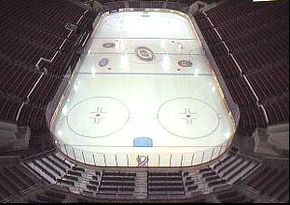
While the strength and skill of great ice skaters is immediately obvious, it's easy to overlook the remarkable surface that makes it all possible. But as it turns out, varying the characteristics of indoor ice just a little bit can make the difference between a gold-medal performance and an embarrassing spill.
Indoor ice rinks are used for all sorts of sports and recreational activities, including hockey, figure skating and speed skating. In all of these sports the quality of the ice makes a big difference.
Advertisement
Forming a good skating surface isn't as simple as making a tray of ice cubes. Freezing a rink correctly takes no less than a dozen stages, with some stages laying ice that may be as thin as 1/32 of an inch (0.8 millimeters). Some layers require paint to create an attractive background and, in the case of hockey, provide clear markings. And ice that's best for one sport may be completely unacceptable for another.
In this article, we'll visit with Don MacMillan, ice supervisor for the RBC Center and the NHL Carolina Hurricanes. We'll also learn about the history of indoor ice rinks, the creation of a new ice surface, the rink's characteristics and logistics, and rink maintenance.
If you’re interested in ice skating and other cold weather activities, read about ice climbing and check out a video from Discovery’s Fearless Planet.